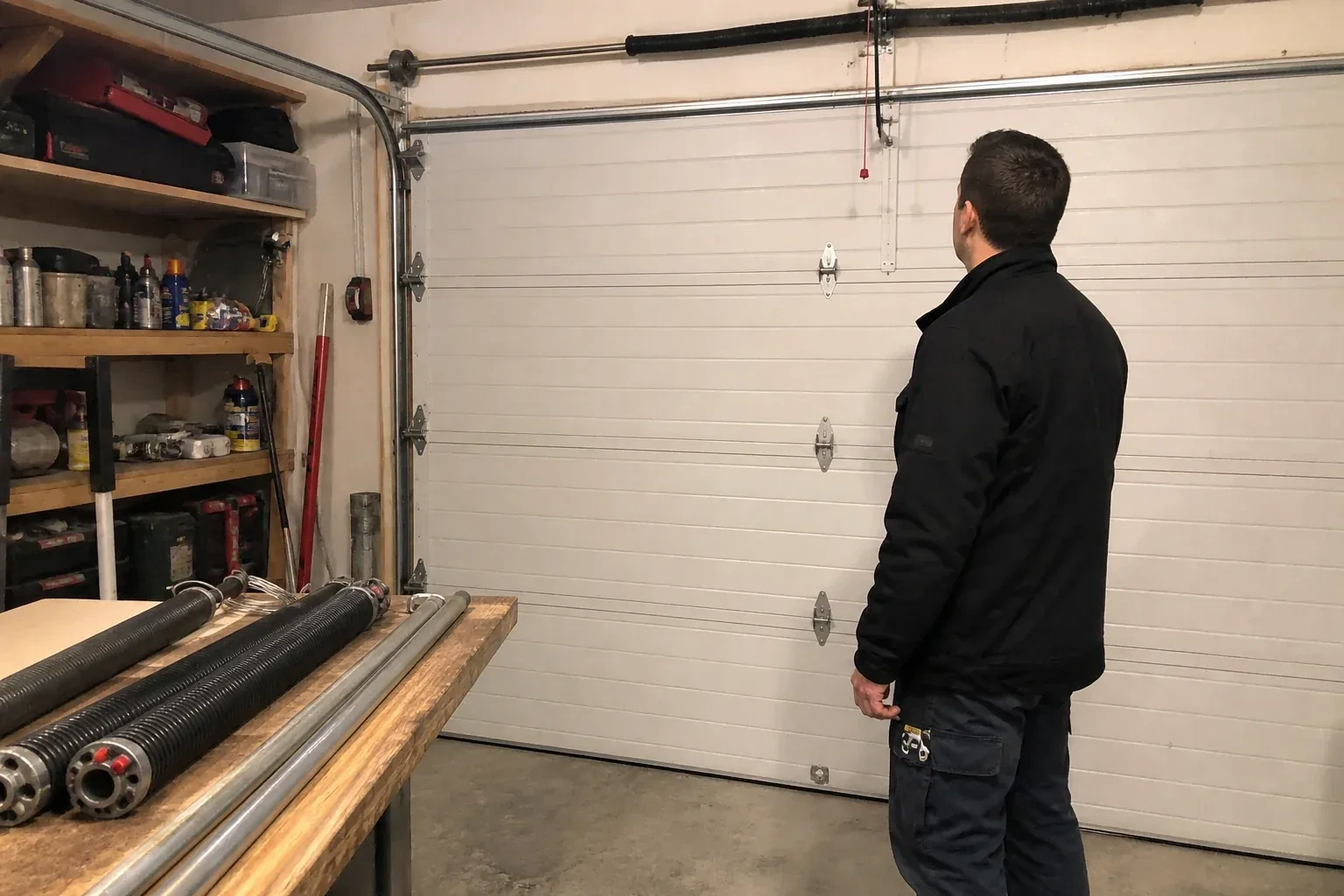
Emergency Springs · Humber Valley
Extension Spring Replacement in Humber Valley
A bang like a dropped toolbox came from the garage last night. This morning one of the long springs beside the track hangs in two pieces, and the door will only rise a few inches before the opener gives up and stops.
Call now · open 24/7(289) 804-5732Right now
Before the door is looked at
Call (289) 804-5732, open 24/7.
When a spring breaks, the safe approach for the household is to leave the door where it is, keep people and vehicles clear, and avoid running the opener, which can damage the top section, the trolley or the gear drive.
Pull the manual release only when the door is fully closed unless a technician asks otherwise; a door disconnected while partly open can move on its own if the springs are out of balance.
Never drive a vehicle at a closed door to get out; the door collapses and the stored tension in the counterbalance is released. Use the release, the outside key release, or a technician.
In plain words
Extension springs are the two long coil springs that run beside the horizontal tracks of a garage door, one on each side. They stretch as the door closes and pull back as it opens, and that pull is what makes a heavy door feel light. Replacement puts a new, matched pair on the door. The technician opens and secures the door so the springs are slack, removes the old set, fits springs rated for the door's actual weight with containment cables through their centres, threads the lift cables over the pulleys, and adjusts both sides until the door balances. The opener is reconnected and tested last.
How the visit goesIt is the first hard frost of the year and the door on the old detached garage has stopped halfway, squealing at one pulley. The springs are the ones that came with the door decades ago, orange with rust where they hang near the back wall.
Extension Spring Replacement · Humber Valley
How the visit goes
- 1
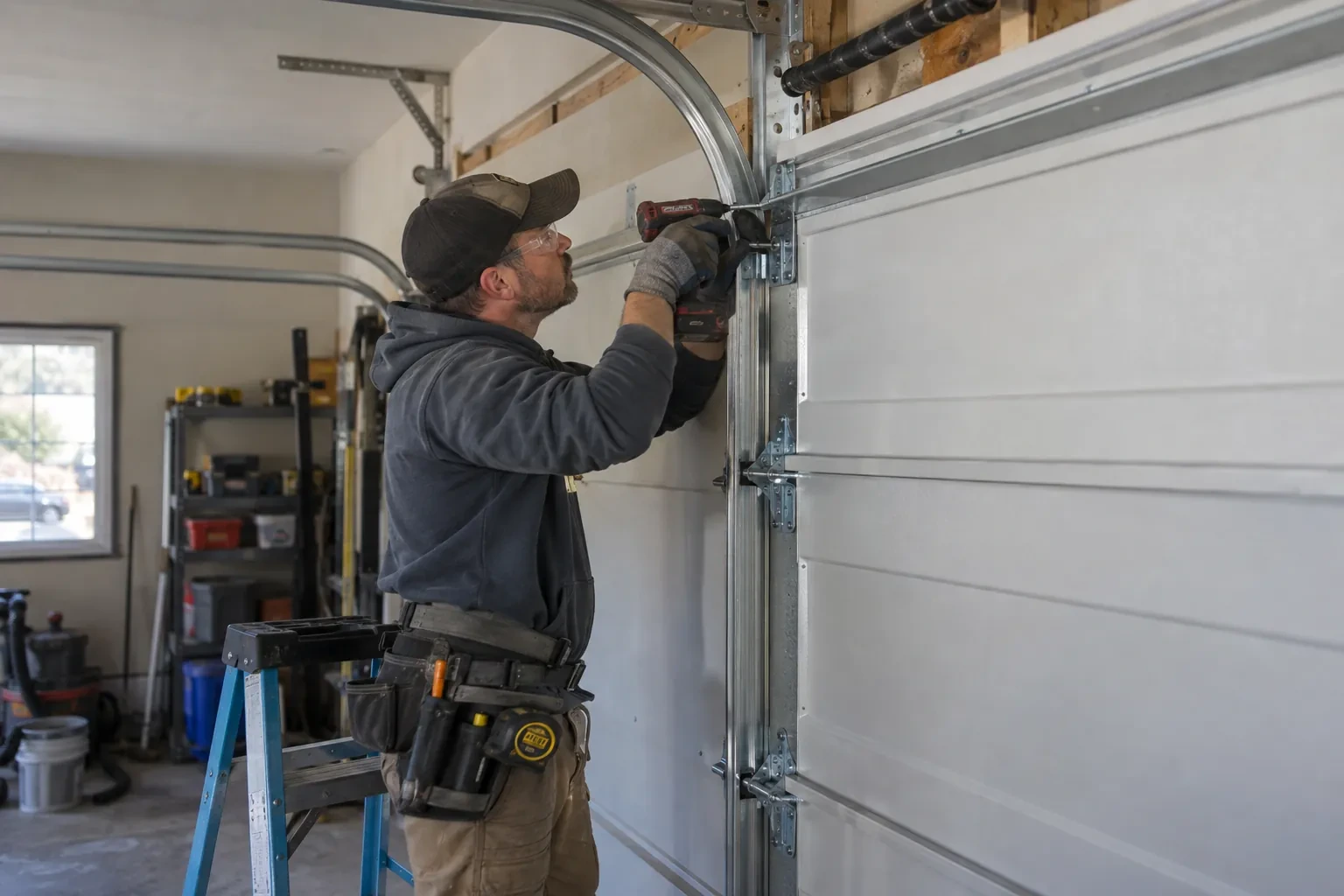
Securing the door with the springs slack
An extension spring is stretched tight when the door is closed and nearly relaxed when the door is fully open, so the first move is to get the door up. The technician pulls the opener's release, raises the door by hand if it will go, and clamps both vertical tracks below the bottom rollers so the door cannot come down. If a broken spring has left the door stuck partway, it is lifted and supported with the weight taken on clamps and props before anything else is handled. With the door held open, the springs, pulleys and hooks can be examined and removed like ordinary hardware, which is the whole reason the sequence begins this way.
- 2
Running the lift cables
Each lift cable starts at the bottom bracket, where its loop goes over the pin or is secured with a clevis pin. From there it runs up the vertical track, over the fixed pulley at the front of the horizontal track, back along the track to the pulley on the end of the spring, around it, and forward again to the S-hook or adjusting clip at the front hanger. The technician keeps the cable seated in each pulley groove and makes sure it passes on the correct side of the containment cable and the track. Cables are renewed if the old ones showed any fraying or rust, and always as a pair of the same length.
- 3
Lubrication that keeps the new set turning
Twice a year, in spring and before winter, a can of garage-door lubricant does most of the maintenance the springs need. Spray a light coat along each extension spring, working from the hanger to the pulley; it slows rust in a damp garage and quiets the coils. Put a drop on each pulley axle and on the bolts through the pulley forks, then on the hinge pins and roller stems. Leave the tracks dry and wipe them clean, since grease there collects grit and stops rollers rolling. Heavy grease and general-purpose oil are avoided on the springs because they hold moisture against the wire. Run the door a few times afterwards to spread the film.
In the van
- Garage-door spray lubricant
- Lag screws and hanger bolts
- Containment (safety) cables
- S-hooks and adjusting clips
- Extension springs, matched pair
What affects the quote
- 1
Converting to torsion instead
Where the garage has the headroom, some owners take the opportunity to move to a torsion system. That is a different job with different hardware and is quoted as its own option.
- 2
Hangers and anchor points
A rear hanger that has loosened, a front bracket bent by a jumped cable, or framing that needs a new anchor point adds fasteners, angle iron and a little time.
- 3
Track or section damage found on the way
A bent horizontal track, a bracket pulled off the jamb or a top section twisted by running the opener on a broken spring is separate repair work, quoted on its own.
Same fees day, night or weekend.
Extension Spring Replacement: questions
What is a safety cable, and does my door need one?
A safety or containment cable is threaded down the inside of each extension spring and fixed at the hanger behind and the bracket in front. It carries no load in normal use. If a spring snaps, the cable keeps the broken halves in place beside the track. Every extension-spring door should have one each side, and the industry's inspection checklist asks for it. Doors installed decades ago often have none; they are added with the new springs.
I added insulation and windows to the door. Does that affect the springs?
Yes, and it is one of the more common reasons a pair of springs is suddenly found wanting. Insulation panels, glazed sections, a wood overlay or a new steel skin all add weight the original springs were never chosen for, so the door grows heavy and the opener strains. When the springs are replaced, the door is weighed as it is now, and the new pair is rated for the door you actually have.
Can I use the door as soon as the work is done?
Yes. The last steps of the visit are the balance test by hand, several full cycles under power and the opener's reversal checks, so the door is ready for normal use when the technician leaves. New springs need no settling period. It is worth running it yourself once or twice while the technician is still there, so you know what a properly balanced door sounds and feels like from now on.
Springs & Hardware
Bigger photo, sooner job: Emergency Book soon Plan ahead
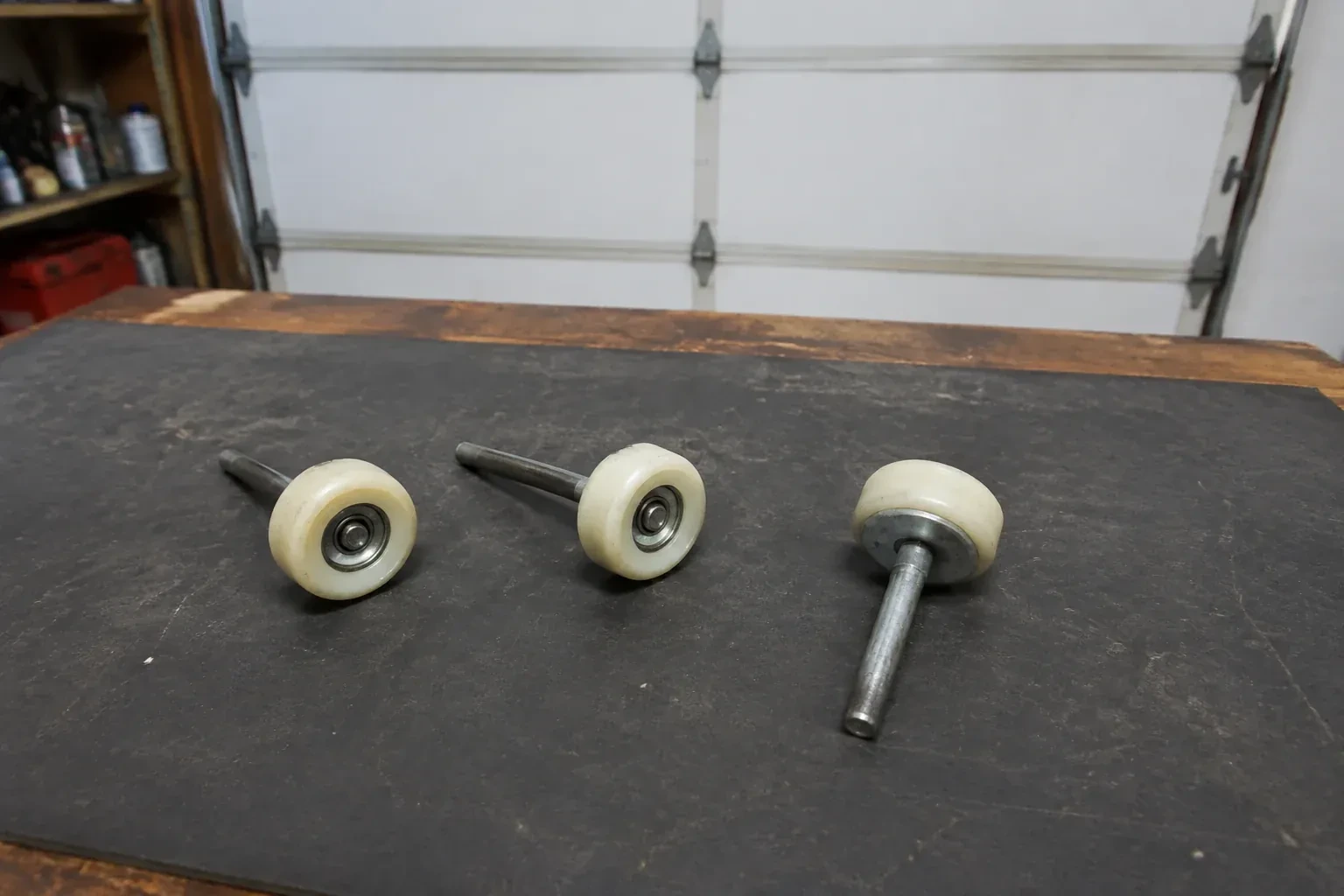 Book soonGarage Door Roller ReplacementOne of the little wheels along the edge of the door has a chunk missing, another sits crooked in its hinge, and there is a fine…
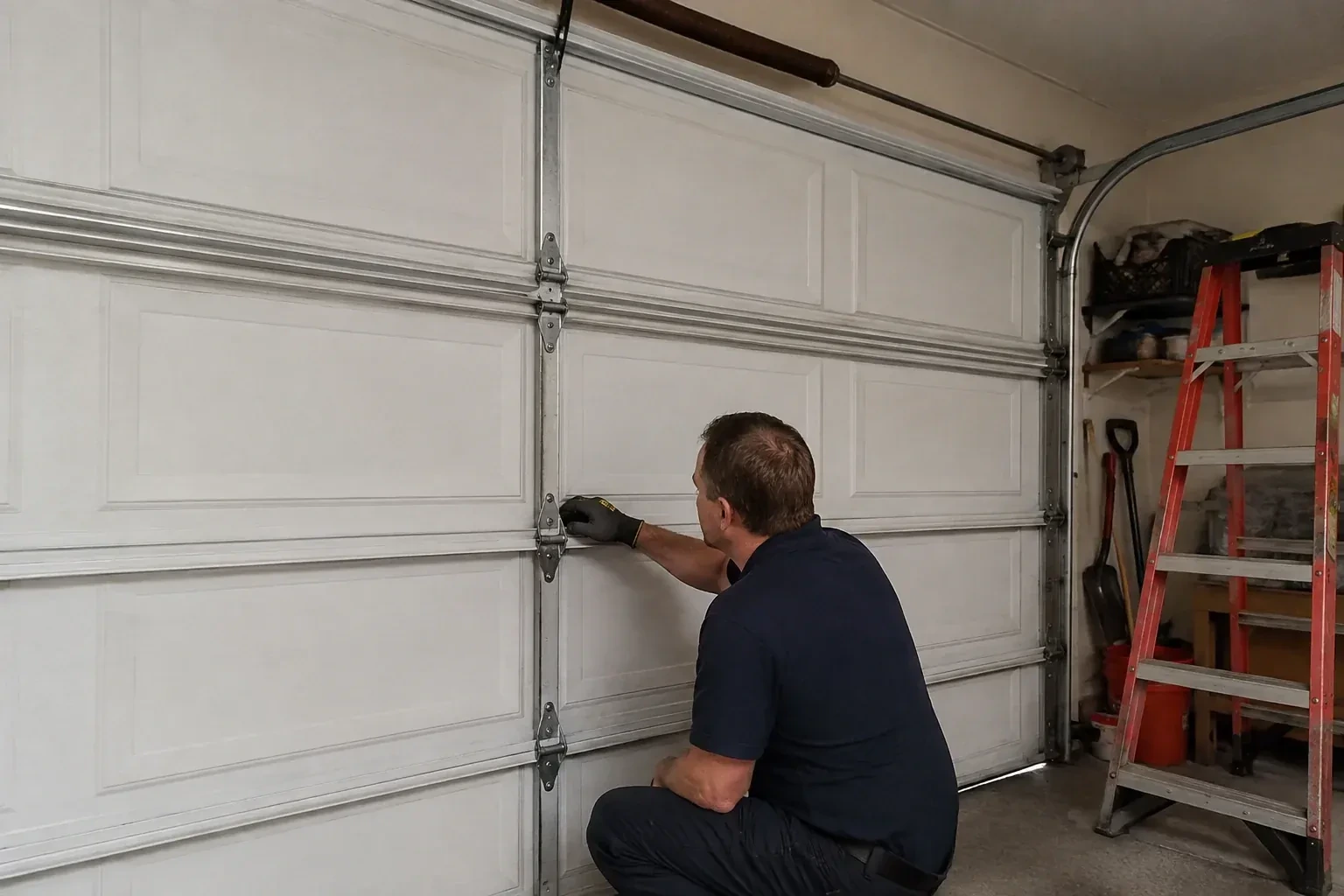 Book soonGarage Door Hinge ReplacementThe roller at the top of the second panel is leaning outward and only half of the wheel is still in the track.
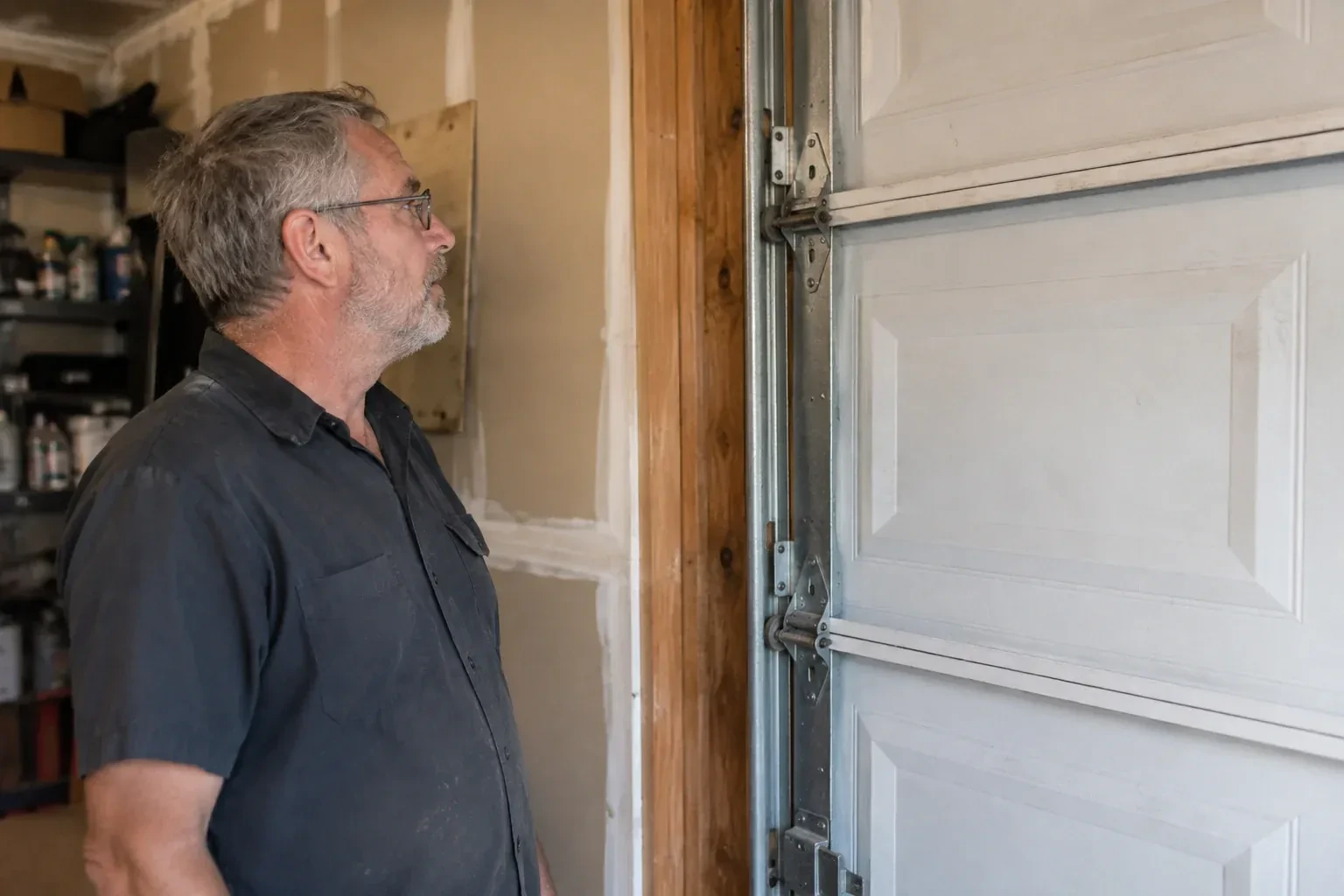 Book soonGarage Door Track Repair or ReplacementHalfway up, the door lurches and one roller rides onto the lip of the channel.
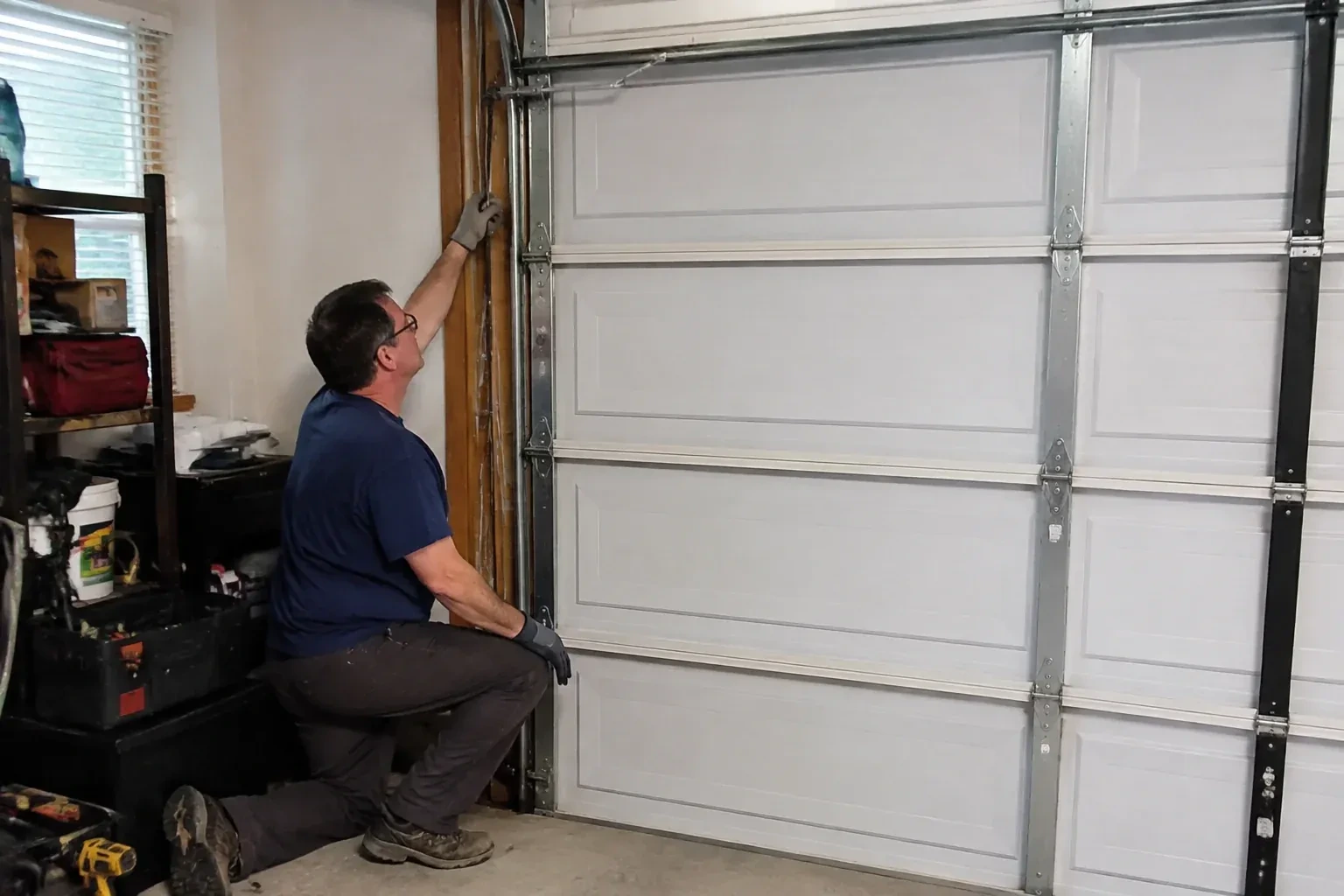 EmergencyGarage Door Cable ReplacementThere was a sharp crack from the garage, and when you went to look the door had dropped on one side and jammed.
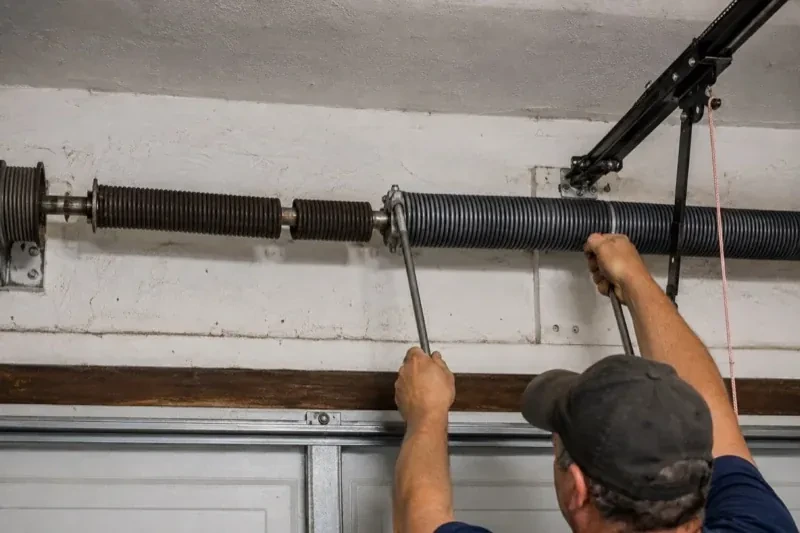 EmergencyTorsion Spring ReplacementLooking up at the coil above the door, you can see a clean split with a gap of several centimetres between the two halves.
Extension Spring Replacement near you
Toronto, Ontario
Humber Valley information
- Town
- Humber Valley, Toronto, Ontario
- In business
- 12 years
- Hours
- Open 24/7 · nights, weekends and holidays, same fees
- Phone
- (289) 804-5732
- Visits
- On-site assessment preferred. Request a visit or call.
What the census means at the door
58%
Older homes. About 58% of homes in Toronto were built in 1980 or earlier, according to the 2021 Census.
Wiring in an older garage may be a single outlet on the ceiling shared with the light, so a new opener is chosen with that in mind, and a battery backup covers the door during a power cut. The technician looks at the outlet before recommending a unit.
23%
Single-detached houses make up about 23% of homes in Toronto (2021 Census).
Where most residents live in attached homes, a technician's day includes coordinating with neighbours: parking the van without blocking a shared lane, keeping noisy work to reasonable hours, and finishing a door in one visit so the row is not disrupted twice.
Nearby
Open 24/7
Request a visit
A bang like a dropped toolbox came from the garage last night.
Call now · open 24/7(289) 804-5732- On-site assessment preferred
- Same fees day, night or weekend
- 12 years in business