Plan ahead Repairs · Toronto
Garage Door Tune-Up
Halfway up, the door shudders. The sections seem to catch for a moment, the whole assembly shakes, then it carries on as if nothing happened.
Call now · open 24/7(289) 804-5732In plain words
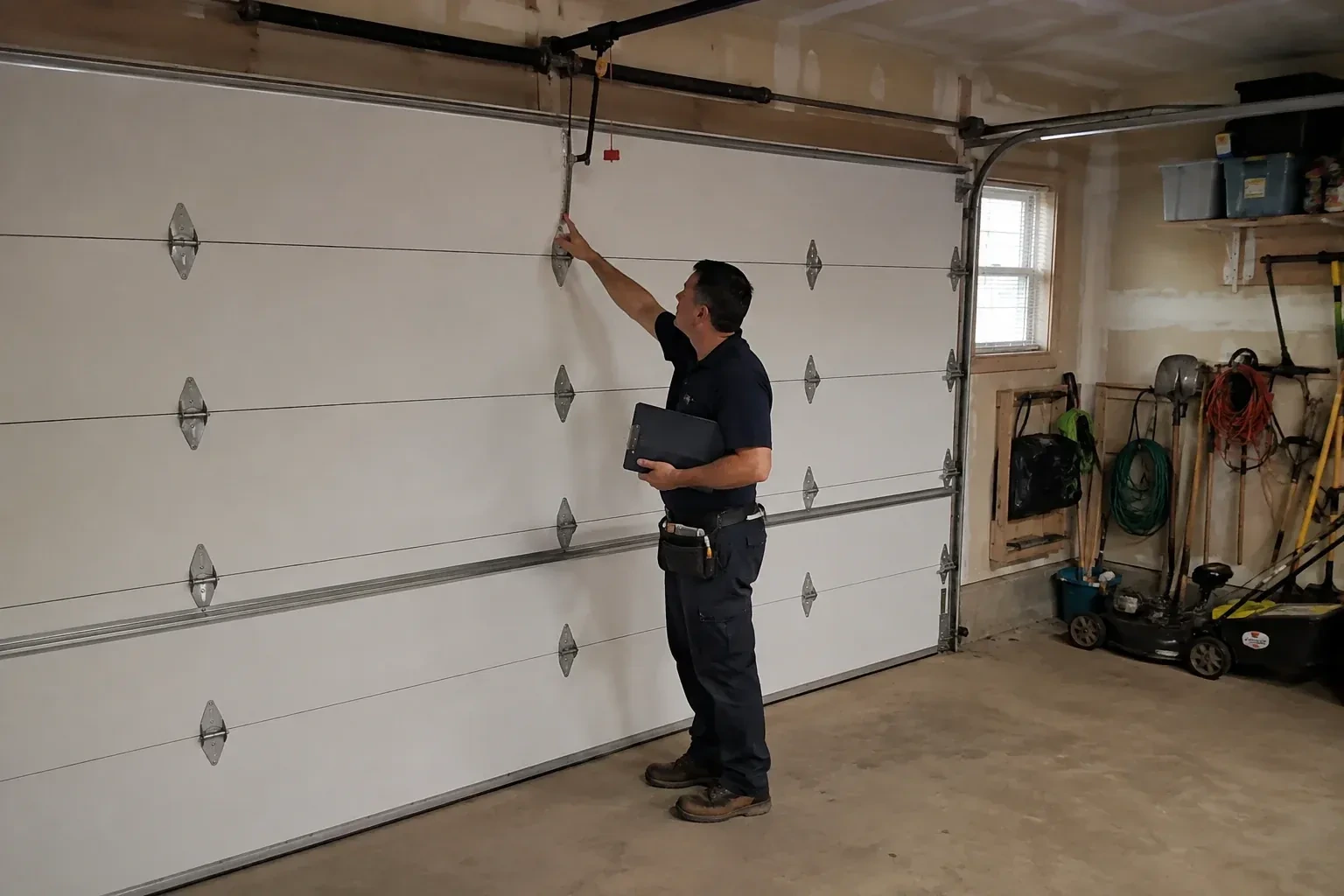
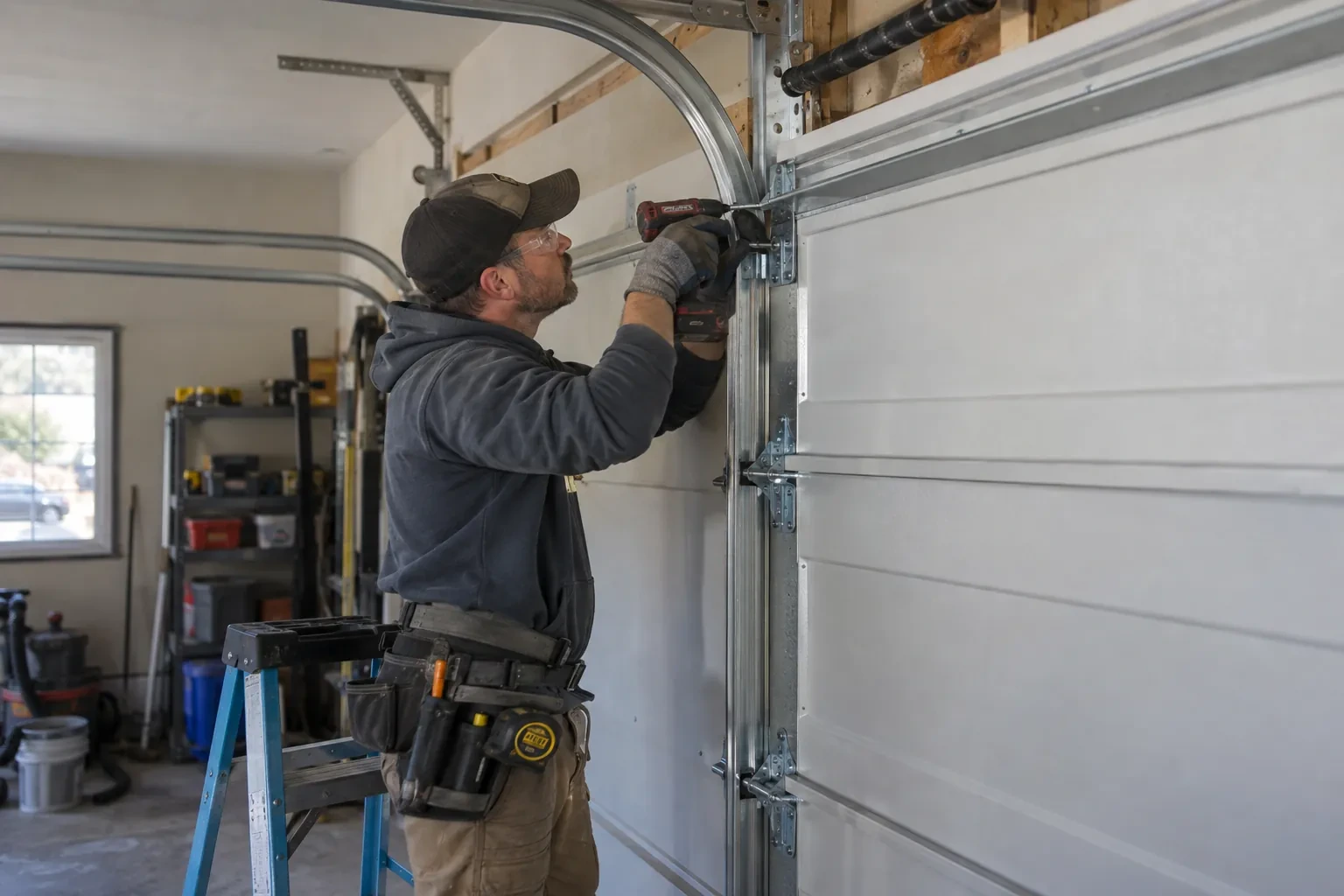
The visit follows a set order. First the technician watches a full cycle, up and down, from a safe distance, noting where the noise, shaking or hesitation lives. Then the door is closed and inspected hardware by hardware, from the bottom brackets to the torsion shaft. The manual release is pulled and the door is lifted by hand to feel the balance. Only then does the work start: fasteners, lubrication, opener adjustments and sensor alignment. A second cycle and the reversal tests close the visit, and the difference between the first run and the last is the measure of the tune-up.
How the visit goesYou pulled the red cord to lift the door by hand during a power cut and it felt like lifting a car. The opener has been doing all the work and grumbling about it, and you are not sure how long that can go on.
Garage Door Tune-Up · Toronto
How the visit goes
- 1
Sorting the sounds by where they live
Noise is the most common reason a tune-up is booked, and every sound has an address. A high squeak that repeats with each section movement points to dry hinge pins. A rumbling that follows the door up and down usually comes from roller bearings. A sharp rattle at the top of travel is often a loose track bracket or hinge screw. A rhythmic slap along the ceiling is a slack chain on the opener rail. A pop or crack as the door starts is worth a closer look at the springs and drums. The technician places each sound, then checks that spot directly rather than lubricating everything and hoping.
- 2
Setting travel and force on the opener
The opener has two settings that drift over time: how far the door travels, and how much force it applies before deciding something is in the way. The technician runs the door and adjusts the down travel so the door seals firmly on the floor without bowing the top section or crushing the seal, and the up travel so it stops fully open without the trolley hitting the stop. Force is set as low as will reliably close the door, because a low force setting is what lets the door reverse gently on contact. On a sectional door the arm is kept from passing straight up and down at the closed position, which protects the top section and the rail.
- 3
A written record and a priority list
The visit ends with a plain document rather than a verbal summary. It lists what was tightened, lubricated and adjusted; how the balance and both reversal tests came out; the make and model of the door and opener; and the condition of the main parts, sorted into three groups: healthy, worth watching, and ready for its own repair with a quote attached. This record is what makes the next tune-up a comparison rather than a fresh start. It also gives you exact words when a new sound turns up, so you can say which hinge or which roller instead of describing a noise, and it is a useful page in the home file when the house is sold.
In the van
- Bottom seal (astragal)
- Socket set and drivers
- Replacement steel or nylon rollers
- Hinge screws and track bolts
- 2x4 test block and tape measure
What affects the quote
- 1
Photo-eye and wiring work
Cleaning and realigning sensors is routine. A bent bracket, a chafed wire or a sensor that has failed means a part or a rewire, which is named separately.
- 2
Condition of rollers and hinges
Worn rollers or a cracked hinge found during inspection can be replaced on the spot if you choose, and each replaced part is listed as its own line on the quote.
- 3
Height and access
A tall door with the opener and springs high on the header, or a garage packed with storage along the tracks, adds ladder work and time compared with a clear standard-height bay.
Same fees day, night or weekend.
Garage Door Tune-Up: questions
What is the difference between a tune-up and a safety inspection?
An inspection looks and reports; a tune-up looks, reports and then does the maintenance. Both begin with an observed cycle and a check of hardware, balance, sensors and reversal. A tune-up goes on to tighten fasteners, lubricate the moving points, adjust the opener and align the photo-eyes, and it may swap a worn roller or a bottom seal on the spot. If you want the door serviced rather than assessed, the tune-up is the one to book.
Can you replace my rollers with quieter ones during the tune-up?
Often, yes, if you decide you want them and stock is on the truck. Nylon rollers with sealed bearings run noticeably quieter than plain steel rollers and need no lubricant. Rollers on the middle sections can be changed with the door clamped in the track; the bottom rollers sit in the bottom brackets, which hold spring tension, and are changed as part of a separate job. The technician can tell you how many are worn and what the change would involve.
Is a tune-up worthwhile on a door that seems to work fine?
Yes, because a garage door wears quietly. Hinge pins run dry long before they squeal, screws back out a turn at a time, springs lose tension by degrees and sensors drift. A yearly tune-up keeps the door in the condition its maker intended, catches a fraying cable or a cracked hinge while it is a small job, and confirms the safety reversal is doing its work. It is the same logic as an oil change on a car that is still running.
Repair & Maintenance
Bigger photo, sooner job: Emergency Book soon Plan ahead
 Plan aheadGarage Door Safety Inspection
 EmergencyOff-Track Garage Door ResetThe door came down fine but with a scraping noise, and now the vertical track on one side is bowed away from the wall.
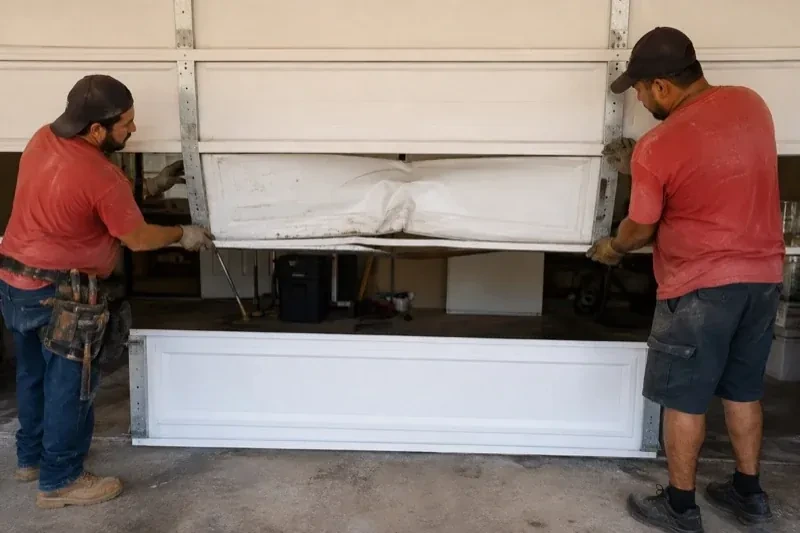 Book soonGarage Door Panel ReplacementFrom outside, the horizontal groove between two sections now steps sideways by a centimetre.
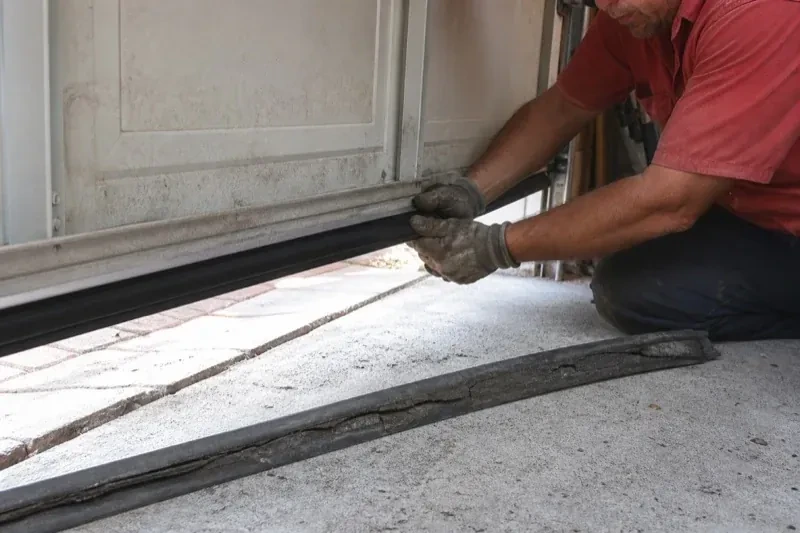 Plan aheadGarage Door Bottom Seal Replacement
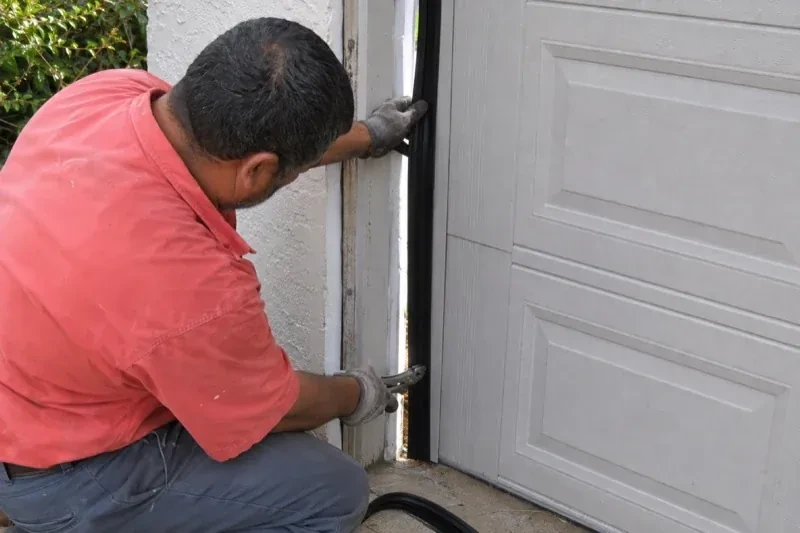 Plan aheadGarage Door Perimeter Weatherstrip
Garage Door Tune-Up near you
Toronto, Ontario
Toronto information
- Town
- Toronto, Ontario
- In business
- 12 years
- Hours
- Open 24/7 · nights, weekends and holidays, same fees
- Phone
- (289) 804-5732
- Visits
- On-site assessment preferred. Request a visit or call.
What the census means at the door
58%
Older homes. About 58% of homes in Toronto were built in 1980 or earlier, according to the 2021 Census.
Older houses frequently have a garage door that was replaced once already, sometimes with a door chosen for the opening rather than the building. When that door reaches its end, there is a chance to pick a style that suits the house properly, and we measure with that in mind.
23%
Single-detached houses make up about 23% of homes in Toronto (2021 Census).
Attached housing frequently has tandem or tight garages with limited headroom and little side room, so replacement openers and tracks are chosen to fit those dimensions. A low-headroom track kit or a wall-mounted jackshaft opener often solves what a standard unit cannot.
Nearby
Open 24/7
Request a visit
Halfway up, the door shudders.
Call now · open 24/7(289) 804-5732- On-site assessment preferred
- Same fees day, night or weekend
- 12 years in business