Emergency Springs · Humber Valley
Garage Door Cable Replacement in Humber Valley
There was a sharp crack from the garage, and when you went to look the door had dropped on one side and jammed. A length of cable lies coiled on the floor by the bottom roller.
Call now · open 24/7(289) 804-5732Right now
Before the door is looked at
Call (289) 804-5732, open 24/7.
Never run the opener on a door that is off its track or hanging crooked; every cycle drives the racked door harder into the rails and can pull the track from the wall or tear a hinge.
Pull the manual release only when the door is fully closed unless a technician asks otherwise; a door disconnected while partly open can move on its own if the springs are out of balance.
In plain words
Garage door cables carry the weight of the door as tension held by the springs, which is why the work follows a careful, well-rehearsed sequence rather than simply hooking a cable back on. On a torsion system the technician clamps the door, disconnects the opener and unloads the springs with winding bars before any cable, drum or bracket is touched; on an extension system the door is instead raised fully and clamped so its pulley-mounted springs relax. Once the system is unloaded, replacing the cables is straightforward: the correct length is set, and the counterbalance is tensioned and locked off by the method that system calls for.
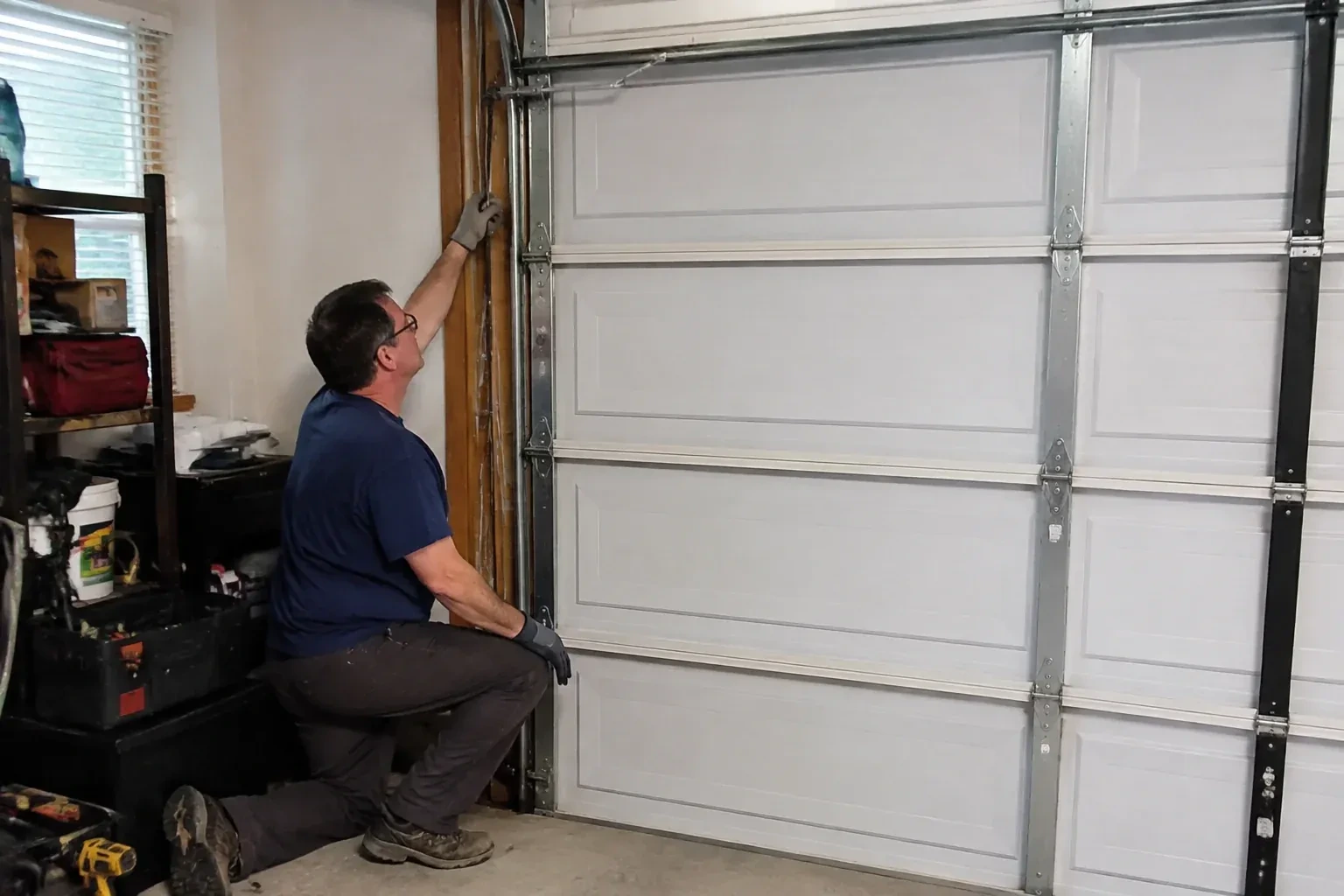
How the visit goesStanding inside with the door closed, you notice the cable on the right side near the floor has gone fuzzy. A handful of broken wires stick out like a bottle brush and the steel underneath is brown.
Garage Door Cable Replacement · Humber Valley
How the visit goes
- 1
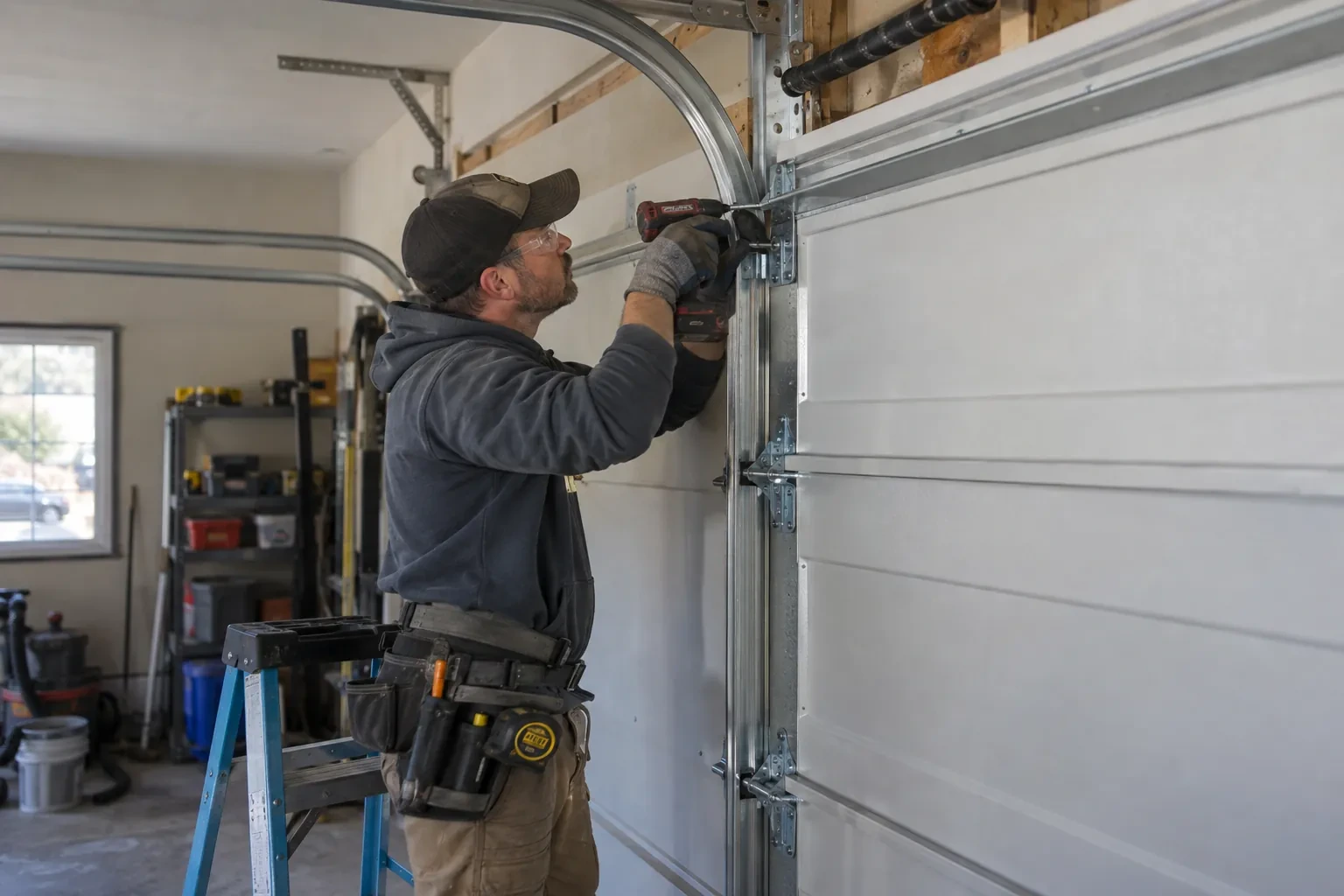
Making the door safe to work on
Nothing is touched until the door cannot move. The technician pulls the opener's release cord so the motor is out of the picture, clears the opening, and clamps the track just above a roller or props the door if it is jammed partway. If one cable has let go, the door is probably tipped and binding in the track, with its weight resting unevenly on the remaining cable and spring, so the first job is to take that weight on clamps or a support. Only then does the assessment of drums, springs and brackets begin. This step is calm and deliberate, and it is what allows every later step to be done with both hands.
- 2
Taking the tension off the springs
With the door clamped and the opener disconnected, the technician unloads the torsion springs. Two solid winding bars sized to the cone holes are used in turn: one holds the cone while the set screws are loosened, then the spring is let down a quarter turn at a time, bar over bar, until the coil is relaxed and the shaft turns freely. Every turn released is counted, because the same number goes back on later. On an extension door the technician instead raises the door fully and clamps it, which lets the springs hang slack. Once the tension is off, cables, drums and brackets can be handled like any other hardware.
- 3
Checking the balance yourself, safely
You can confirm the door is still balanced any time without touching a spring or cable. With the door closed, pull the opener's release cord so the trolley disconnects, then lift the door by its handle or a safe gripping point to about waist height and let go gently. A balanced door should not lift or fall far on its own; a little slow drift is normal, and what calls for a technician is rapid movement, a heavy feel, binding in the track, or a result outside the manufacturer's balance instructions, not drift alone. Reconnect the opener as the manual describes, usually by running it once. Doing this each season catches wear early and keeps the opener working lightly.
In the van
- Bottom rollers and hinges
- Galvanized aircraft-type lift cables
- Winding bars
- Bottom brackets with cable pin
- Torsion springs and winding cones
What affects the quote
- 1
Oversized, commercial or high-lift doors
Doors taller or wider than a standard residential opening, or fitted with high-lift hardware, use heavier cables and drums and take longer to set up, which the quote reflects.
- 2
Door height and lift type
Cable length follows the door height and whether the hardware is standard lift, low headroom or high lift. Taller doors and high-lift conversions take longer cables and specific drums.
- 3
Drums that need replacing
Worn grooves, a cracked slot or a drum that has spun on the shaft mean a new pair of drums, which adds parts and a little time to the same visit.
Same fees day, night or weekend.
Garage Door Cable Replacement: questions
Why did the cable come off the drum?
A cable leaves its drum when it goes slack for a moment while the drum keeps turning. The usual reasons are the door closing onto an object or a ridge of ice so the bottom stops early, a spring that has lost tension or broken, or a drum whose set screws let it slip on the shaft. The technician finds which of these happened and corrects it so the new cable stays seated.
Why should the bottom brackets never be loosened by hand?
The bottom bracket is where the cable attaches, so whenever the springs are wound it carries a share of the door's weight as tension. Loosening it while the counterbalance is loaded releases that tension all at once. Many manufacturers now fit tamper-resistant fasteners for this reason. The technician unloads the springs first, after which the bracket is just a piece of hardware to unbolt and replace.
What is the cable drum, and when does it need replacing too?
The drum is the grooved wheel on each end of the torsion shaft that the cable winds onto as the door opens. Its grooves guide the cable in a single layer and its shape sets how the door is balanced through its travel. A drum is replaced when the grooves are worn or cracked, the cable slot is damaged, or it has spun on the shaft and scored it. Drums are changed in pairs.
Springs & Hardware
Bigger photo, sooner job: Emergency Book soon Plan ahead
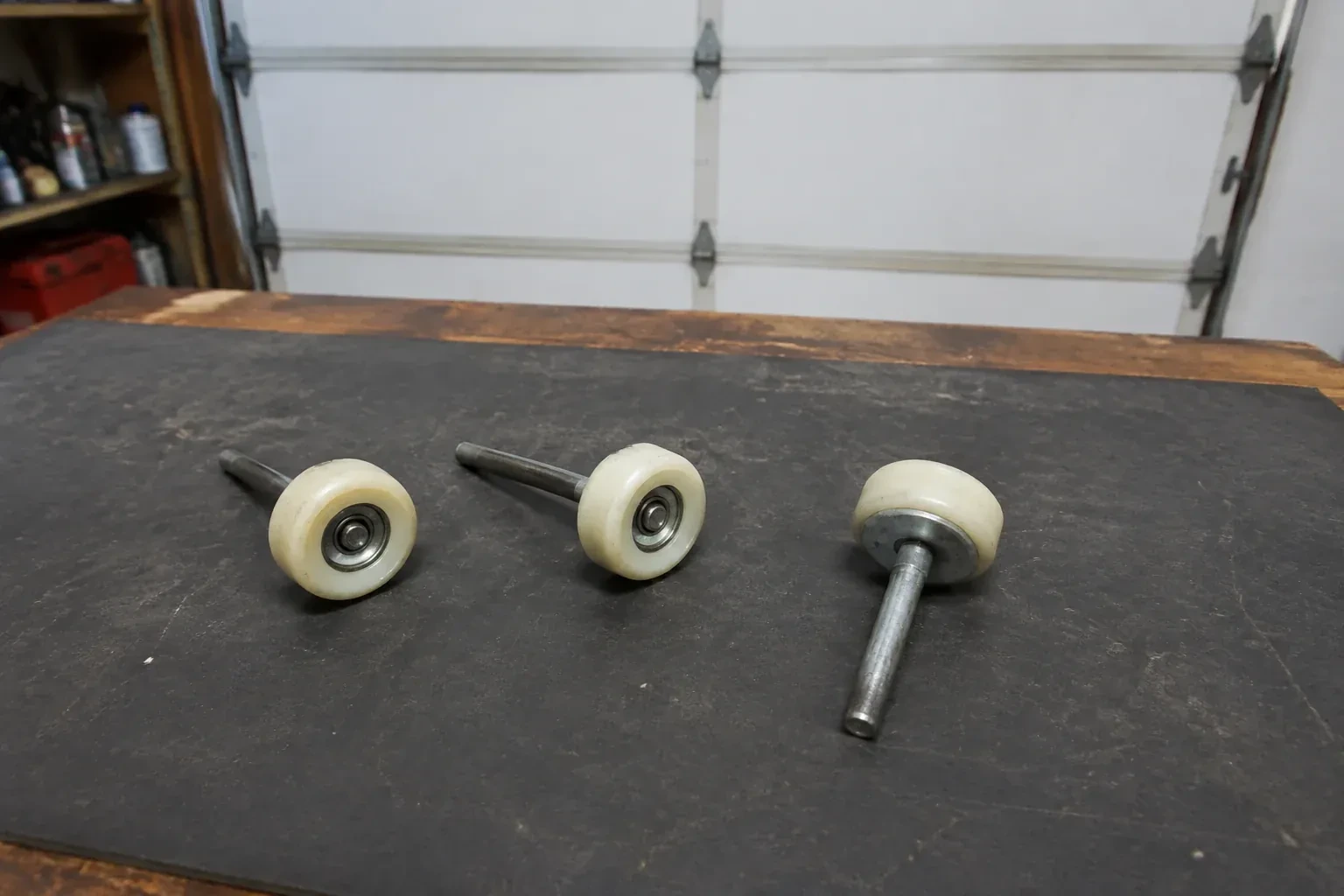 Book soonGarage Door Roller ReplacementOne of the little wheels along the edge of the door has a chunk missing, another sits crooked in its hinge, and there is a fine…
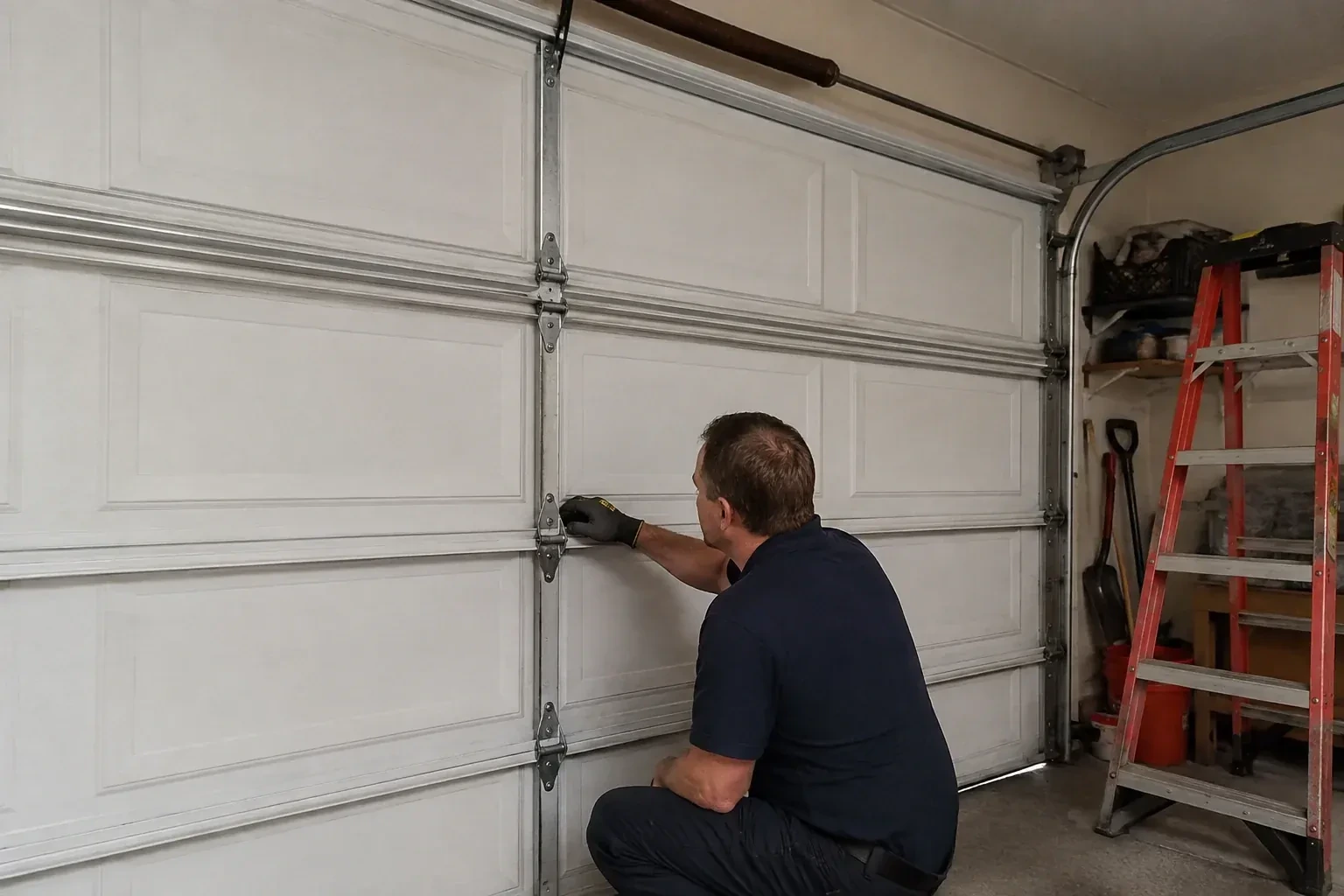 Book soonGarage Door Hinge ReplacementThe roller at the top of the second panel is leaning outward and only half of the wheel is still in the track.
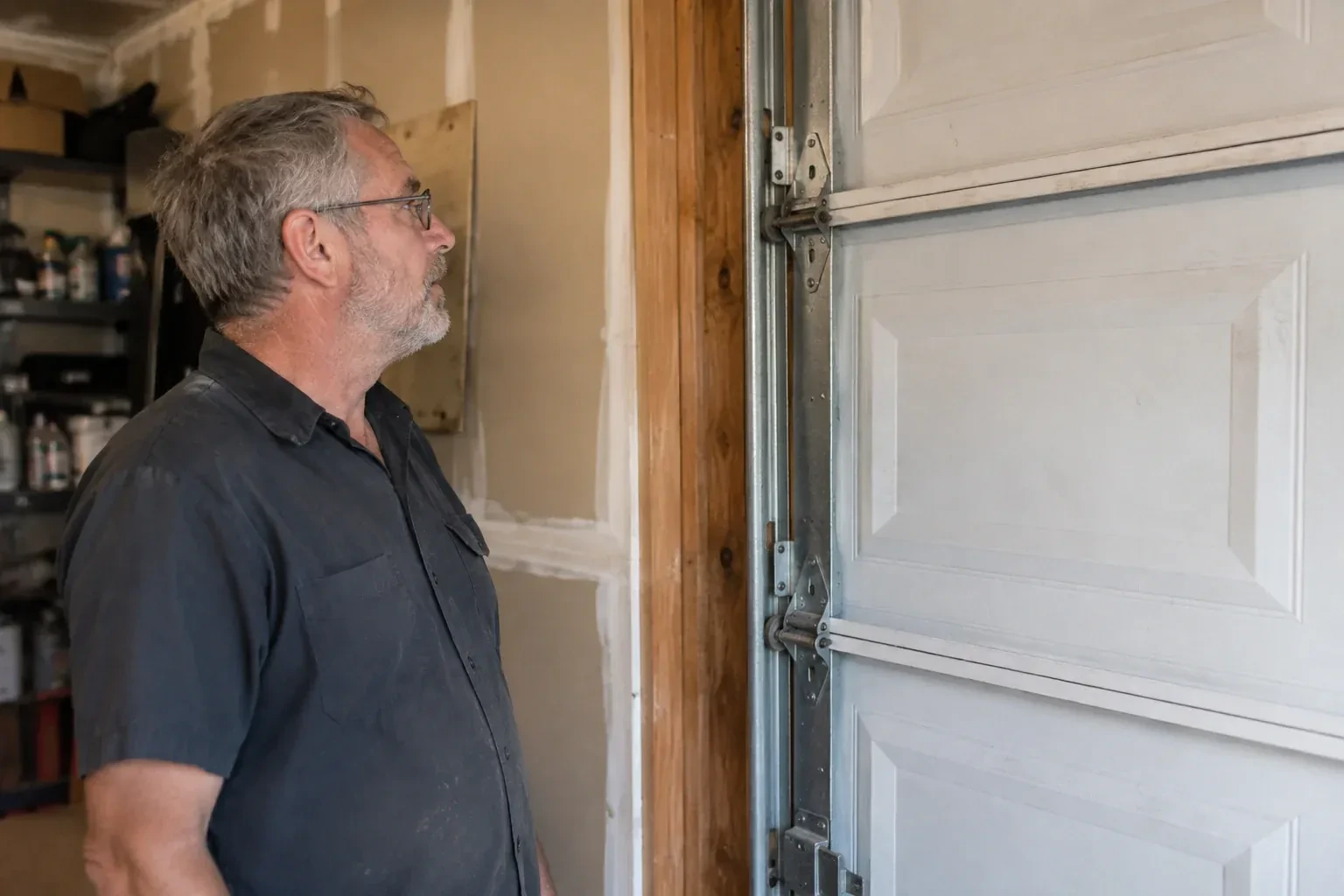 Book soonGarage Door Track Repair or ReplacementHalfway up, the door lurches and one roller rides onto the lip of the channel.
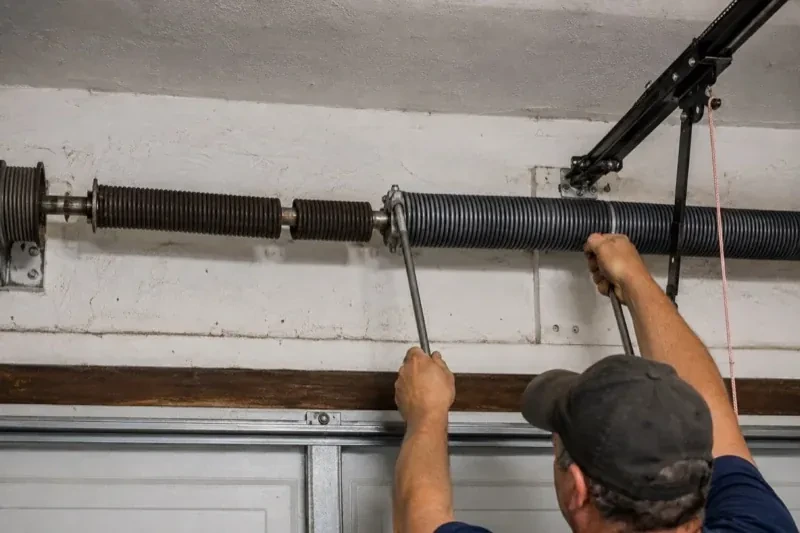 EmergencyTorsion Spring ReplacementLooking up at the coil above the door, you can see a clean split with a gap of several centimetres between the two halves.
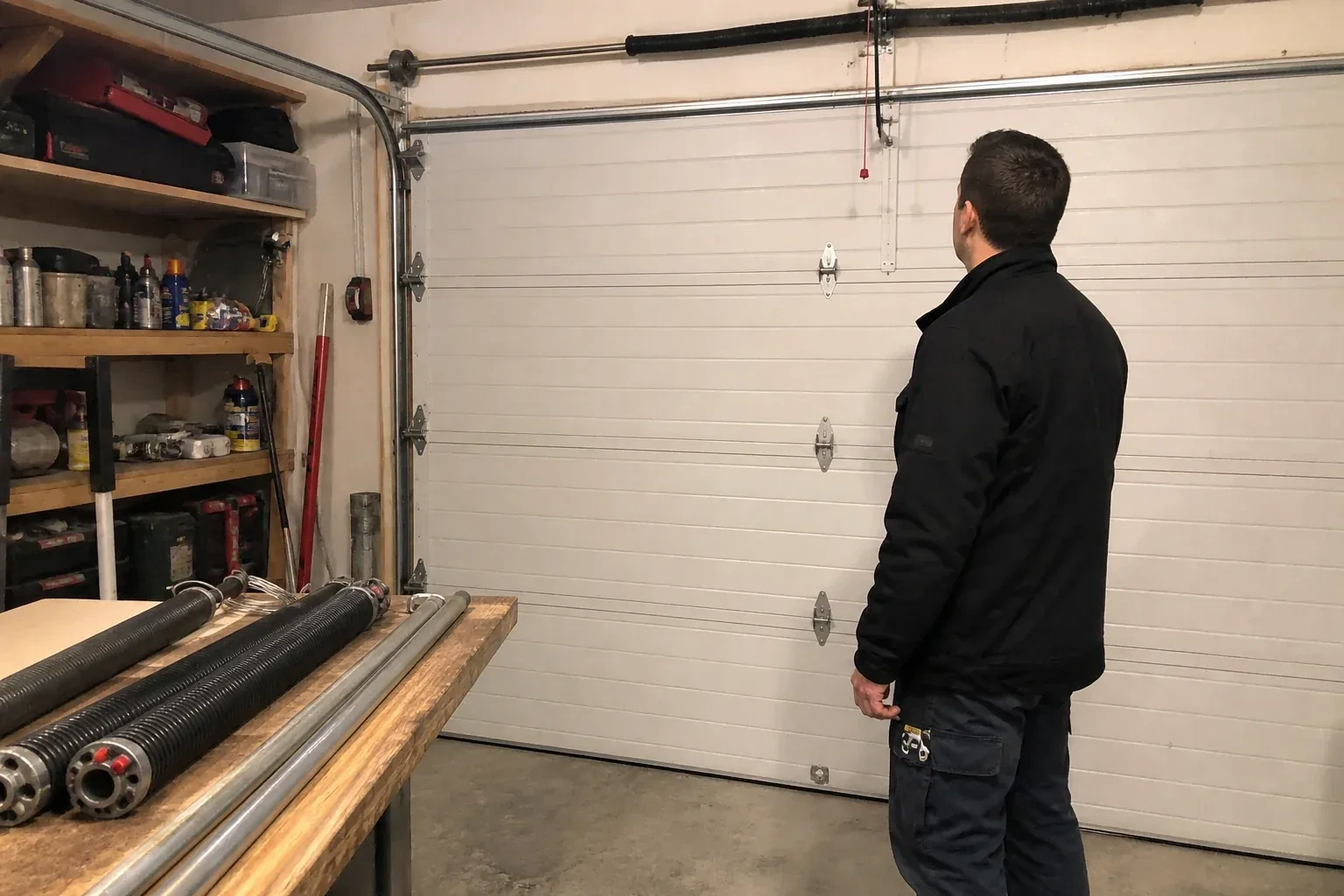 EmergencyExtension Spring ReplacementA bang like a dropped toolbox came from the garage last night.
Garage Door Cable Replacement near you
Toronto, Ontario
Humber Valley information
- Town
- Humber Valley, Toronto, Ontario
- In business
- 12 years
- Hours
- Open 24/7 · nights, weekends and holidays, same fees
- Phone
- (289) 804-5732
- Visits
- On-site assessment preferred. Request a visit or call.
What the census means at the door
58%
Older homes. About 58% of homes in Toronto were built in 1980 or earlier, according to the 2021 Census.
Wiring in an older garage may be a single outlet on the ceiling shared with the light, so a new opener is chosen with that in mind, and a battery backup covers the door during a power cut. The technician looks at the outlet before recommending a unit.
23%
Single-detached houses make up about 23% of homes in Toronto (2021 Census).
Where most residents live in attached homes, a technician's day includes coordinating with neighbours: parking the van without blocking a shared lane, keeping noisy work to reasonable hours, and finishing a door in one visit so the row is not disrupted twice.
Nearby
Open 24/7
Request a visit
There was a sharp crack from the garage, and when you went to look the door had dropped on one side and jammed.
Call now · open 24/7(289) 804-5732- On-site assessment preferred
- Same fees day, night or weekend
- 12 years in business